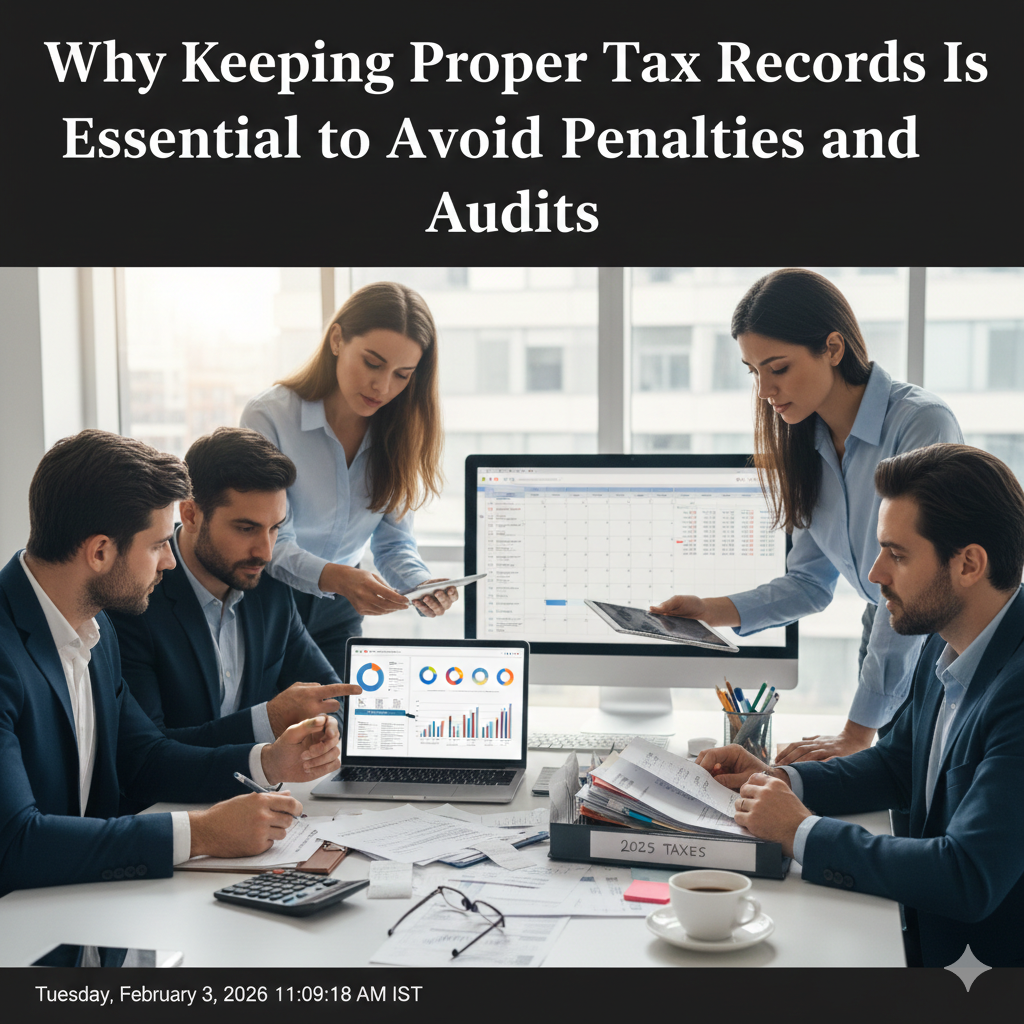
Keeping tax records may not feel urgent until the moment you need them. Unfortunately, that moment often arrives unexpectedly in the form of an ATO query, audit, or penalty notice. For many Australians, poor record-keeping is one of the most common reasons tax issues arise in the first place.
Whether you’re an individual investor, a property owner, or a business operator, maintaining accurate records is not optional. Proper tax return record keeping protects you legally, financially, and mentally. It also ensures you’re prepared if the ATO ever asks questions.
This guide explains why organized tax records matter, what records you should keep, and how long you need to keep them to avoid penalties and audits.
Why Tax Record Keeping Matters More Than You Think
Tax records are your proof. They show how income was earned, how expenses were incurred, and why deductions were claimed. Without documentation, even legitimate claims can be denied.
The ATO places strong emphasis on tax return record-keeping, especially when it comes to income-producing assets, businesses, and property. Inadequate records can result in:
- Disallowed deductions
- Reassessments
- Interest charges and penalties
Working with a registered tax agent in Australia helps ensure your records meet compliance standards from the start.
Understanding How Long You Need to Keep Tax Records
One of the most common questions taxpayers ask is how long they should retain tax records for various situations. In most cases, Australian tax law requires records to be kept for at least five years after lodgement.
Understanding how long keep tax records applies differently depending on whether the records relate to:
- Personal income
- Business activity
- Assets such as property
Failing to retain records for the required period can expose you to penalties if the ATO reviews past returns.
Property Ownership Makes Record Keeping Even More Important
Property-related tax matters are a major focus area for the ATO. Maintaining accurate property tax records is essential for landlords, investors, and anyone who has bought or sold property.
Your property tax records should include:
- Purchase and sale documents
- Rental income statements
- Expense receipts related to repairs and maintenance
Keeping organized tax records on property ensures you can justify claims and accurately calculate capital gains when required.
Why Property Tax Searches Rely on Accurate Records
Many taxpayers underestimate how much information the ATO already has access to. A property tax search allows the ATO to cross-check ownership details, transaction dates, and reported income.
If your declared figures don’t align with data identified through a property tax search, your return may be flagged for review. Proper tax records on property provide the evidence needed to support your position and resolve issues quickly.
Small Businesses Face Higher Record-Keeping Expectations
If you run a business, record-keeping becomes even more critical. The ATO expects businesses to maintain clear and complete documentation to support income and deductions.
Working with a small business tax accountant Australia business owners trust helps ensure records are accurate and audit-ready. This includes invoices, payroll records, expense receipts, and asset registers.
Reliable business and tax services focus on creating systems that make compliance manageable rather than overwhelming.
Tax Record Keeping and Audit Risk
Poor tax return record-keeping is one of the fastest ways to increase audit risk. Missing documents, inconsistent reporting, or unclear expense claims can trigger scrutiny.
Professional financial tax services help reduce this risk by ensuring:
- Records are stored correctly
- Claims are supported by evidence
- Reporting aligns with ATO requirements
A proactive approach is far less stressful than trying to reconstruct records during an audit.
Digital vs Physical Records: What’s Acceptable?
The ATO allows both digital and physical records, as long as they are accurate, readable, and accessible. However, digital storage is often safer and easier to manage.
Regardless of format, how long you keep tax records still applies. Digital systems must retain records for the required period and protect them from loss or corruption.
A registered tax agent Australia professionals trust can advise on compliant storage methods that suit your situation.
Why Business Owners Need Ongoing Support
Business owners often juggle multiple responsibilities, which makes consistent record-keeping challenging. This is where structured business and tax services add real value.
By working with a small business tax accountant Australia companies rely on, you gain:
- Better financial visibility
- Accurate reporting
- Reduced audit exposure
Strong systems make it easier to stay compliant without constant stress.
How R&K Taxation Experts Help Clients Stay Compliant
Professionals like R&K Taxation Experts help individuals and businesses build reliable record-keeping habits that stand up to scrutiny.
By offering tailored financial tax services, R&K Taxation Experts support clients with:
- Organised tax return record-keeping
- Guidance on property tax records
- Ongoing business and tax services
Their approach focuses on prevention rather than damage control, which is key to avoiding penalties and audits.
The Cost of Poor Record Keeping
Failing to maintain proper records doesn’t just create inconvenience. It can lead to real financial loss.
Common consequences include:
- Lost deductions
- Fines and penalties
- Extended audit processes
Investing in professional support from a registered tax agent Australia taxpayers trust helps protect you from these outcomes.
Building Better Record-Keeping Habits
Good habits make compliance easier. Simple steps such as storing receipts promptly, categorising expenses correctly, and reviewing records regularly can make a significant difference.
Consistent tax return record keeping also allows your accountant to provide better advice and identify tax-saving opportunities earlier.
This is where structured financial tax services and reliable business and tax services truly pay off.
Confidence Comes From Being Prepared
Keeping accurate tax records is not just about avoiding trouble. It’s about confidence. When your records are organised, you can respond calmly to ATO queries and make informed financial decisions.
Whether it’s maintaining property tax records, understanding how long to keep tax records, or managing complex business documentation, preparation is your strongest protection.
With guidance from professionals like R&K Taxation Experts, Australians can stay compliant, reduce audit risk, and avoid unnecessary penalties by simply keeping the right records, the right way.