
Most small business owners are brilliant at what they do. A tradie who runs an exceptional team. A retailer who genuinely understands their customers. A consultant who delivers results that keep clients coming back year after year. But being great at your craft and being great at managing the financial future of your business are two very different skill sets, and confusing them is one of the most common reasons otherwise capable businesses plateau or fail.
Business financial planning is the discipline that bridges that gap. It takes the energy and ambition you have for your business and gives it a structured financial path to follow. Without it, growth tends to be reactive, inconsistent, and far more stressful than it needs to be. With it, you are making decisions from a position of clarity rather than hope.
Here is why business financial planning benefits every business owner, regardless of what stage you are at right now.
What Business Financial Planning Actually Means
Before getting into the why, it is worth being clear about what we are actually talking about. Small business financial planning is not just about budgeting or keeping your books tidy. It is a broader, more forward-looking process that covers where your business is headed financially, how you plan to get there, and what needs to be in place to make that journey sustainable.
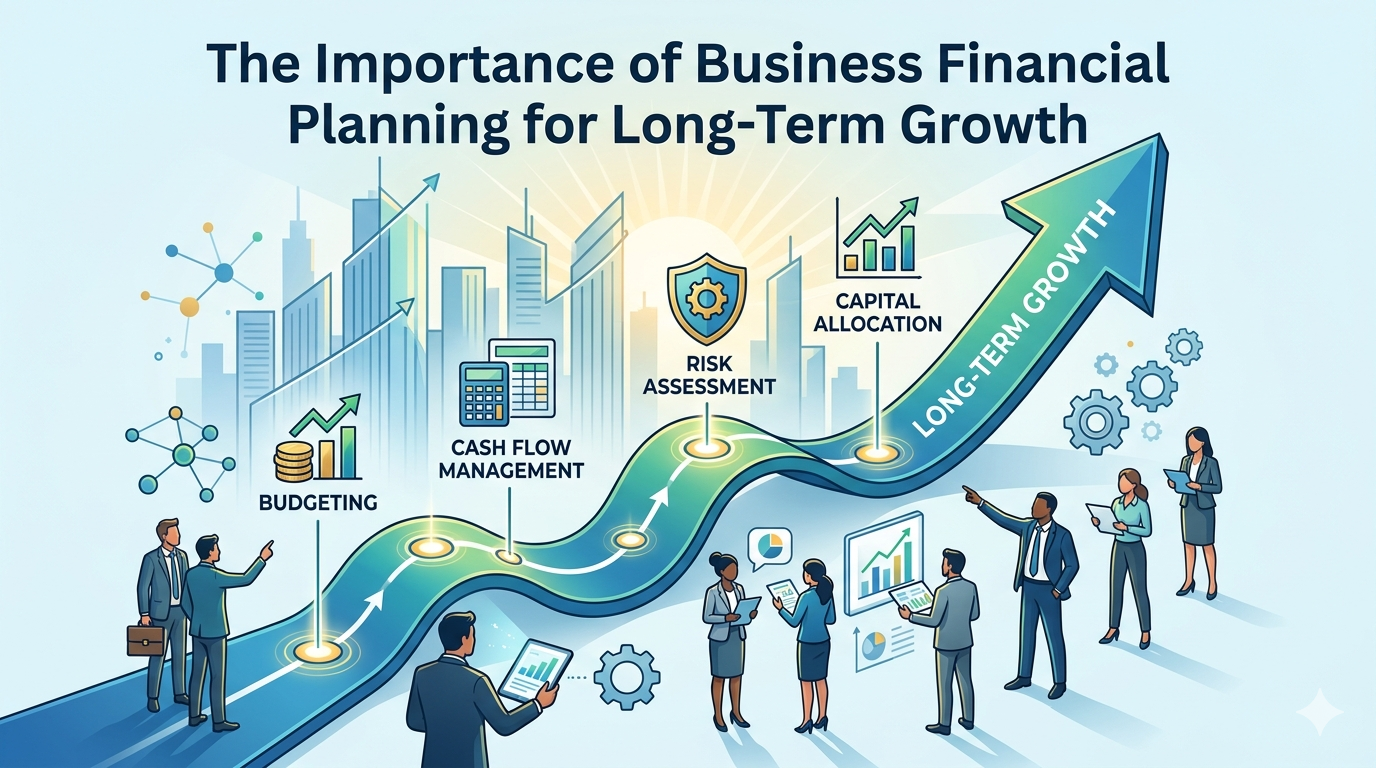
It includes setting realistic revenue and profit targets, understanding your cost structure, planning for tax obligations throughout the year, managing cash flow across different seasons or business cycles, preparing for major investments or expansion, and building financial resilience for the periods when things do not go exactly to plan.
Done well, strategic financial planning is not a document you create once and file away. It is a living framework that guides your decisions throughout the year and evolves as your business grows and changes.
Why Most Businesses Skip It and Why That Costs Them
The honest reason most small business owners do not engage seriously with financial planning for growth is time. Running a business is consuming. There are customers to serve, staff to manage, operations to maintain, and a hundred other demands competing for your attention every single day.
Financial planning feels like something you will get to when things settle down. But things rarely settle down, and the cost of postponing this kind of structured thinking compounds quietly in the background. Missed tax planning opportunities. Cash flow crunches that could have been anticipated. Growth decisions are made on instinct rather than numbers. Investment calls that looked good at the time but were never properly modelled against the business's actual financial position.
None of these problems announces itself loudly. They accumulate gradually, and by the time they become visible, they are significantly harder and more expensive to address than if they had been planned for from the start.
The Direct Connection Between Planning and Growth
Here is something that business owners who work with financial advisors consistently report: having a clear financial plan does not just reduce stress. It actively accelerates growth.
Financial planning for growth works because it forces clarity. When you sit down and map out what your business needs to earn, what it costs to operate, where the profit is actually coming from, and what the numbers need to look like at each stage of expansion, you start making better decisions almost automatically. You stop pursuing revenue that looks good on the surface but does not contribute meaningfully to profit. You identify where your money is working hard and where it is quietly being wasted.
A long-term business strategy without financial grounding is just an ambition. With it, ambition becomes a plan with milestones, a budget, and a realistic timeline. That is the difference between a business that talks about growing and one that actually does.
Cash Flow Is Not the Same as Profitability
One of the most important things small business financial planning addresses is the gap between profit and cash flow, a gap that trips up a surprising number of otherwise healthy businesses.
You can be profitable on paper and still run into serious cash flow problems if the timing of your income and expenses is misaligned. Invoices are paid late. Seasonal revenue dips. Large tax obligations are arriving without adequate reserves. Stock or equipment purchases that drain the account before the next revenue cycle comes in.
Business financial health requires both profitability and cash flow stability, and planning keeps both in check. A good financial plan builds cash flow forecasting into the regular rhythm of your business so that pressure points are visible weeks or months ahead of time rather than the day they arrive.
Tax Planning Is a Year-Round Activity
One of the most tangible business financial planning benefits is the impact on your tax position. Most business owners think about tax once a year when the financial year ends and their accountant asks for documents. That approach almost always means leaving money on the table.
Proactive tax planning, which is a central part of strategic financial planning, means making decisions throughout the year with your tax position in mind. Business structure reviews, timing of major purchases, superannuation contributions, income splitting strategies, and depreciation planning are all tools that can significantly reduce your tax liability when they are applied thoughtfully across the year rather than retrospectively at lodgement time.
The difference between a business that manages tax reactively and one that plans for it strategically can amount to thousands of dollars annually. Across a decade of business ownership, that gap is substantial.
Building Resilience Into Your Business
Every business faces unexpected challenges. Economic downturns, loss of a major client, supply chain disruptions, interest rate changes, or simply a slower quarter than anticipated. The businesses that navigate these moments without lasting damage are almost always the ones that planned for them in advance.
Business financial health built on strong planning includes contingency reserves, flexible cost structures, and a clear understanding of the minimum revenue needed to keep the business viable during difficult periods. That resilience does not happen by accident. It is built deliberately through the kind of structured financial thinking that most business owners only wish they had done earlier.
Getting the Right Support in Place
Financial planning services are most valuable when they are delivered by people who understand your industry, your business model, and the specific financial environment you are operating in. Generic advice from a generalist has its limits, especially as your business grows in complexity.
R&K Taxation Experts works with small and growing businesses across Australia to deliver small business financial planning that is practical, personalised, and built around the real goals of each client. From cash flow strategy and tax planning to business structure reviews and long-term growth modelling, the team brings the kind of hands-on support that translates financial planning from a concept into a genuine competitive advantage.
If your business has been running on instinct and good work ethic without a clear financial plan behind it, R&K Taxation Experts is the right place to start that conversation. The businesses that grow consistently and sustainably are the ones that plan for it. Everything else is just hoping for the best.