
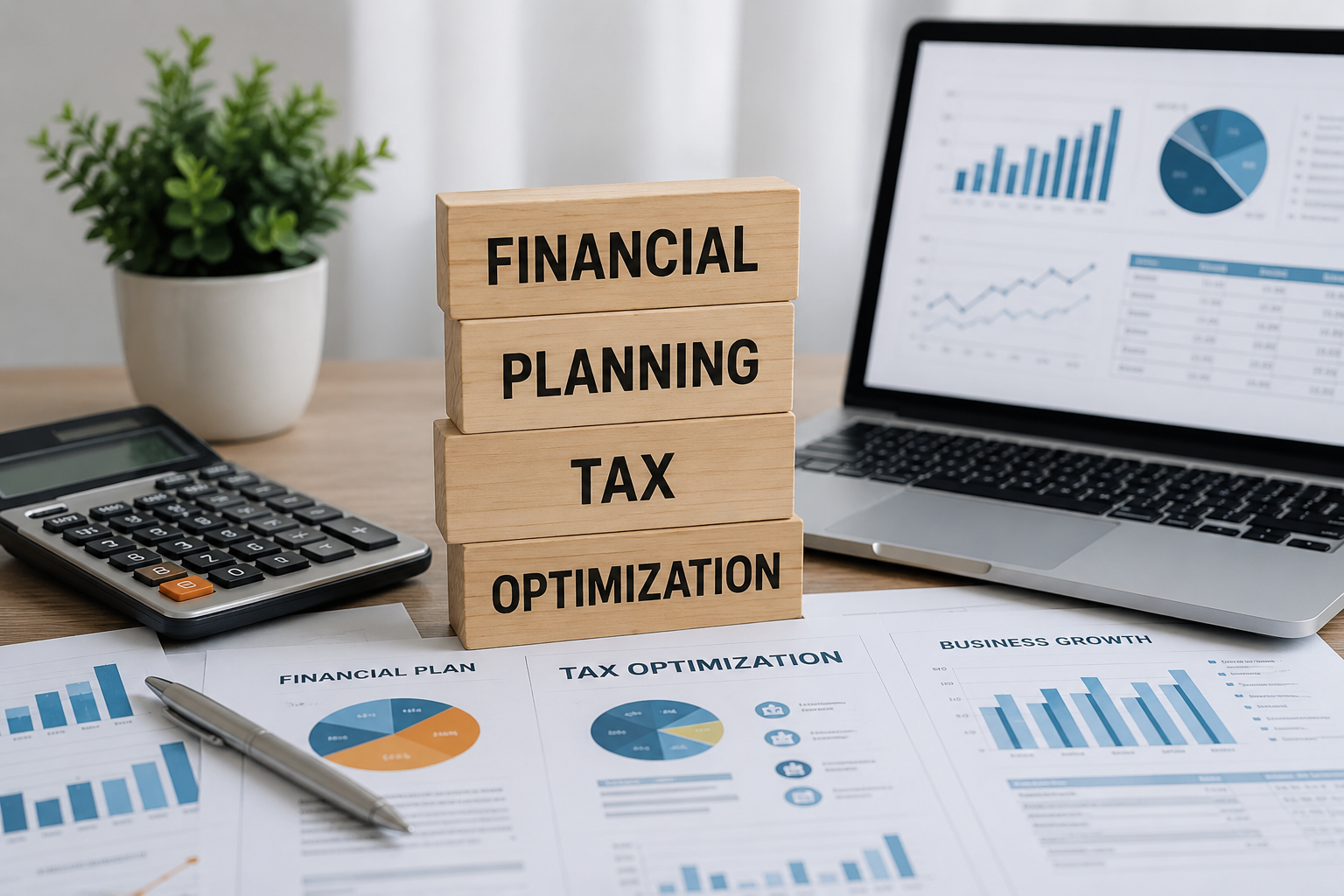
Most business owners understand, at least in theory, that financial planning and tax strategy are important. They hear it from accountants, read it in business publications, and nod along at networking events when someone brings it up. But understanding something in theory and actually building it into the way you run your business are two very different things.
The gap between knowing you should plan and actually doing it is where most of the financial pain in small businesses lives. Unexpected tax bills. Cash flow crunches that could have been avoided. Growth decisions are made on gut feel rather than solid numbers. These are not signs of a bad business. They are signs of a business operating without a proper financial framework underneath it.
This blog is about closing that gap. Not with abstract advice, but with a clear picture of what business financial planning and tax optimization actually look like in practice for Australian small business owners.
What Business Financial Planning Really Means
There is a tendency to think of business financial planning as something large corporations do with dedicated finance teams and complex software. In reality, it is just as relevant and just as achievable for a business with five employees as it is for one with five hundred.
At its core, business financial planning is the process of understanding where your business stands financially right now, defining where you want it to be, and mapping out the decisions and actions that will get you there. It covers revenue and profit targets, cost management, cash flow forecasting, investment planning, tax strategy, and risk management.
Done consistently, it transforms the way you make decisions. Instead of reacting to financial situations as they arise, you are anticipating them. Instead of discovering problems at the end of the financial year, you are spotting them months in advance, when there is still time to do something about them.
Starting With a Financial Health Assessment
Before you can plan effectively, you need an honest picture of where your business currently stands. A financial health assessment looks at the key indicators of your business's financial condition and identifies both strengths and vulnerabilities that should inform your planning.
A thorough financial health assessment typically covers profitability across different revenue streams, cash flow patterns and pressure points, debt levels and serviceability, working capital adequacy, tax position and any outstanding obligations, and the overall structure of the business from a financial risk perspective.
This assessment is not about judgment. It is about clarity. Many business owners are surprised by what a proper financial health review reveals, both the problems they suspected but had not quantified and the strengths they had been undervaluing. With a clear baseline in place, strategic financial planning becomes significantly more focused and more effective.
Strategic Financial Planning for Sustainable Growth
Strategic financial planning connects your business ambitions to your financial reality. It is the process of taking your growth goals and working backwards to understand exactly what needs to happen financially to achieve them.
Want to open a second location in two years? A strategic financial planning process will tell you what revenue and profit levels you need to hit before that move is sustainable, how much capital you need to fund it, what the cash flow implications are in the first twelve months of operation, and what tax considerations should inform the structure of the new entity.
Want to bring on two additional staff members in the next six months? The planning process maps out the full cost, including wages, superannuation, on-costs, and the revenue increase needed to justify and sustain that investment without creating cash flow pressure.
This is what separates a business growth strategy built on financial planning from a business growth strategy built on optimism. Both might reach the same destination. Only one has a realistic map for getting there.
Tax Optimization Is Not About Avoiding Tax
It is worth being direct about what tax optimization strategies actually mean, because the phrase can carry the wrong connotation. Tax optimization is not about finding loopholes or pushing the boundaries of what is legal. It is about making sure you are not paying more tax than you are legally required to, which is a completely legitimate and genuinely important part of running a financially healthy business.
Small business tax planning done well covers a range of strategies that are explicitly available to Australian business owners under the tax law. Structuring your business in the most tax-effective way. Timing income and expenses strategically across the financial year. Maximising legitimate deductions. Making superannuation contributions that reduce taxable income while building long-term wealth. Using available concessions and write-offs that the ATO has specifically designed for small businesses.
None of this is aggressive or questionable. It is simply informed, proactive engagement with the tax system rather than passive acceptance of whatever bill arrives at the end of the year.
Tax Planning Australia: Making It a Year-Round Practice
One of the most important shifts any business owner can make is moving from annual tax thinking to year-round tax planning in Australia. When tax is only considered at lodgement time, your options are limited. The financial year has already happened, the income has already been earned, and most of the decisions that could have reduced your liability have already been made one way or another.
When tax planning in Australia is embedded into your regular financial rhythm, the picture changes entirely. Quarterly reviews with your accountant mean you know your estimated tax position months before the year ends. You have time to make strategic purchases, prepay deductible expenses, adjust superannuation contributions, or defer income where appropriate. You arrive on June 30 with a tax outcome you planned for rather than one that surprises you.
Australian Tax Compliance as a Foundation, Not a Ceiling
Australian tax compliance is the minimum standard. Every business needs to meet its obligations accurately and on time, including BAS lodgements, income tax returns, PAYG withholding, superannuation guarantee payments, and any other reporting requirements relevant to the business structure and industry.
But Australian tax compliance should be thought of as the floor, not the ceiling. Meeting your obligations correctly is non-negotiable, and the penalties for getting it wrong are real and sometimes significant. But compliance alone does not optimize your position. It simply keeps you on the right side of the ATO.
The businesses that manage their tax most effectively are the ones that treat compliance as the baseline and build a proactive small business tax planning strategy on top of it. They are not just lodging accurately. They are structuring, timing, and planning with purpose throughout the year.
Building a Business Growth Strategy on Financial Foundations
Growth without financial planning is one of the riskier things a business can do. Expanding too quickly, taking on too much debt, hiring ahead of revenue, or entering new markets without understanding the financial implications can turn a promising business into a struggling one faster than most owners anticipate.
A properly developed business growth strategy is always financially grounded. It understands the cost of growth before committing to it. It identifies the funding required and the most appropriate sources. It models the cash flow implications across different growth scenarios. And it builds in contingencies for the reality that growth rarely unfolds exactly as planned.
The tax optimization strategies built into that growth plan also matter. How a new location is structured, whether to lease or buy equipment, how to handle increased staff costs, and what the GST and income tax implications of higher revenue look like are all questions that should be answered before the growth happens, rather than after.
Bringing It All Together With the Right Support
Business financial planning and tax optimization are not separate disciplines. They are deeply connected parts of the same overall financial strategy, and they work best when they are managed together by people who understand both.
R&K Taxation Experts work with Australian small and medium business owners to build integrated financial planning and tax optimization strategies that reflect the real goals, real challenges, and real opportunities of each business they work with. From financial health assessment and strategic financial planning through to year-round tax planning in Australia and full Australian tax compliance management, the team delivers the kind of comprehensive, personalised support that makes a measurable difference to the businesses they serve.
If your business has been managing its finances reactively and its tax obligations as an afterthought, R&K Taxation Experts is the right conversation to have before another financial year slips by without a proper plan behind it.